
Understanding the Extracellular Matrix in Skin
Updated: 1 day ago
What Is the Extracellular Matrix?
The ECM is a complex network of molecules surrounding cells, especially within the dermis, the layer beneath the epidermis. It is not a single ingredient, a branded technology, or a ready-made treatment. Think of it as both a supporting framework and an interactive environment. It helps tissues resist mechanical forces, retain water, and transmit cues to nearby cells.
Collagen fibers provide tensile strength and an organized structural framework.
Elastic fibers, including elastin-associated structures, contribute to stretch and recoil.
Hyaluronic acid and other glycosaminoglycans help create a water-rich extracellular environment.
Proteoglycans and adhesive glycoproteins participate in matrix organization and cell interactions.
These components act as a network. A change in one part of that network can affect its overall mechanical and biological behavior. That is why ECM research looks beyond the amount of any single molecule and considers organization, turnover, and communication between cells and the matrix.

Fibroblasts and the Matrix: A Two-Way Conversation
Dermal fibroblasts are important cells involved in producing and maintaining ECM components. Their relationship with the matrix is reciprocal. Fibroblasts help organize their surroundings, while the surrounding structure influences how fibroblasts spread, attach, and respond to mechanical signals. Researchers call this form of sensing and response mechanotransduction.
This two-way relationship matters for aging. When collagen fibers become fragmented, fibroblast attachment and mechanical signaling can change. Studies describe feedback processes in which altered matrix organization is associated with lower collagen production and greater matrix-degrading activity. These findings explain biological mechanisms; they should not be translated into guaranteed rejuvenation results for an individual treatment.
What Happens to ECM During Aging and Photoaging?
Skin aging involves both intrinsic processes and external exposures. Chronological aging affects cells and matrix maintenance over time. Ultraviolet radiation adds another major influence. Photoaging can change collagen architecture, elastic fibers, and glycosaminoglycan metabolism. UV-related signaling may increase the activity of matrix metalloproteinases, or MMPs, enzymes involved in the breakdown and normal remodeling of matrix proteins.
MMPs are not simply harmful. Controlled matrix turnover is necessary for normal tissue function. The concern is an imbalance between synthesis, organization, and degradation. With photoaging, changes in these processes can contribute to wrinkles, altered elasticity, and other visible features. Importantly, these outcomes vary by individual, site, exposure history, and additional biological factors.
For consumers and professionals alike, basic prevention remains relevant. The American Academy of Dermatology recommends sun protection, including broad-spectrum SPF 30 or higher sunscreen alongside shade and protective clothing, to help prevent premature skin aging. This advice has a different evidence basis from experimental claims about restoring the dermal ECM.

Why ECM Has Become a Focus in Aesthetic Medicine
Interest in ECM biology reflects a broader scientific conversation about tissue quality and longer-term remodeling. Researchers examine the effects of different biomaterials, injectable formulations, and energy-based technologies on tissue structure and cellular signaling. The key question is not merely whether an intervention changes the skin's appearance, but what was measured, how long the change lasted, and whether meaningful tissue-level outcomes were demonstrated.
A 2026 review of regenerative aesthetics emphasized the need to distinguish biological regeneration from repair, remodeling, and temporary morphological change. It also noted that the evidence base differs substantially among treatment categories. The existence of a plausible mechanism is therefore not interchangeable with clinical proof of regeneration, superiority, or long-term benefit.
ECM Research Is Moving Forward—But What Has Actually Been Shown?
Korean biomaterials researchers are exploring skin-derived, decellularized ECM as a possible multifunctional material. A 2026 laboratory study examined characteristics of skin-derived ECM and responses in human dermal fibroblast assays. Such work is scientifically interesting because whole-matrix materials may offer more diverse molecular cues than single-component formulations.
That does not mean a marketed ECM ingredient or injectable has been proven to produce the same effects in people. Laboratory gene-expression changes, tissue-model findings, and clinical outcomes are different levels of evidence. Researchers must still address formulation identity, manufacturing controls, delivery route, safety, reproducibility, and well-designed human studies before specific product claims can be supported.
Different Product Categories, Different Questions
ECM-related language appears in conversations about topical skincare, hyaluronic-acid products, biostimulatory materials, and professional aesthetic devices. These products cannot be treated as interchangeable. A cosmetic marketed for surface hydration, an injectable with a particular intended use, and a device designed to deliver energy may be evaluated under different safety, evidence, and regulatory frameworks.
For example, an ingredient-focused skincare story may reasonably discuss the general role of hyaluronic acid in the ECM without asserting that an individual cream rebuilds dermal collagen. Similarly, a supplier's claim that a professional aesthetic product stimulates collagen, reverses aging, or regenerates ECM needs support from studies of that exact product, under its actual intended conditions of use. A scientific review of collagen biology alone is not sufficient.
A Practical Checklist for Clinics and Distributors
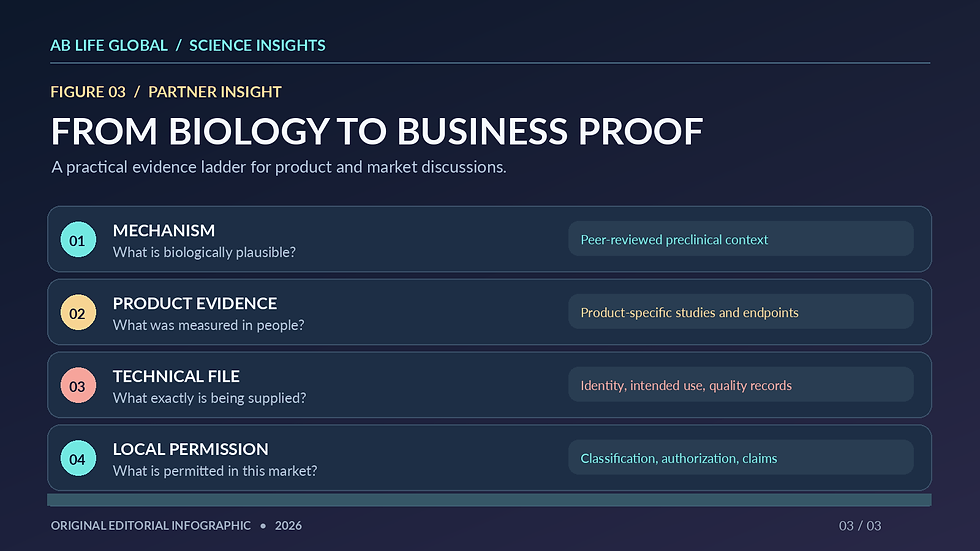
When reviewing an ECM-themed product proposal, professional buyers can use four checkpoints to move from an interesting concept to an informed commercial decision:
Biological mechanism: Which published studies support the proposed mechanism, and are they in vitro, animal-based, or human research?
Product-specific evidence: Are clinical endpoints, comparators, sample sizes, adverse events, and follow-up periods clearly reported for the same formulation and use?
Technical documentation: Can the manufacturer provide current composition, identity, quality information, labeling, and an appropriate instructions-for-use document?
Local permissions: How is the product classified in the destination country, and which claims and commercial activities are authorized there?
Regulatory classification depends on a product's presentation, composition, intended use and design. Its category can determine which authorization and advertising rules apply. A Korean origin label, foreign market listing or research publication must not be presented as evidence that a product is authorized in another destination market.
What ECM Means for Korean Innovation and International Partners
Korean skincare and professional aesthetics portfolios span diverse technologies and formats. ECM literacy gives buyers a better vocabulary for discussing ingredient rationale, dermal science, and supplier documentation without collapsing every product into the same 'regenerative' promise. It also helps marketing teams use language that respects the boundary between educational content and efficacy claims.
For regional distributors, the most valuable starting point is a transparent product conversation. This includes intended user, intended use, available evidence, manufacturing documentation, and market-specific status. Those fundamentals matter at least as much as an attractive trend keyword, whether the target audience is a clinic, professional partner, or specialist retailer.
AB LIFE GLOBAL: Science-Informed, Partner-Led Sourcing
AB LIFE GLOBAL connects Korean medical-aesthetic innovation and advanced skincare with professional partners in different markets. Our portfolio discussions can include Si Belle professional aesthetics and selected Korean skincare ranges, while recognizing that each item has its own formulation, intended use, supporting documentation and regulatory questions.
We use ECM science as an educational lens—not as a blanket claim that any AB LIFE GLOBAL product rebuilds collagen, regenerates skin, or holds approval in a specific market. Clinics, distributors, and sourcing teams are welcome to request product-specific portfolio information and discuss what documentation is relevant to their country and business model.
Professional Takeaways
ECM is a living, organized tissue network, not a single active ingredient.
Collagen, elastin, hyaluronic acid, and fibroblasts are connected through matrix biology.
Mechanistic promise and laboratory data must not be mistaken for product-specific human clinical outcomes.
Commercial readiness depends on evidence, clear intended use, and destination-market classification.
For a professional portfolio conversation, contact dypark@ablife-global.com or visit www.ablife-global.com. Please include your country, organization type, and product area of interest.
References and Further Reading
Editorial note: This article is intended for education and professional sourcing discussion. It is not medical advice or evidence of approval, safety, or efficacy for any specific product. Scientific evidence and local rules should be reviewed for each application.

Comments